
Παρουσίαση/Προβολή
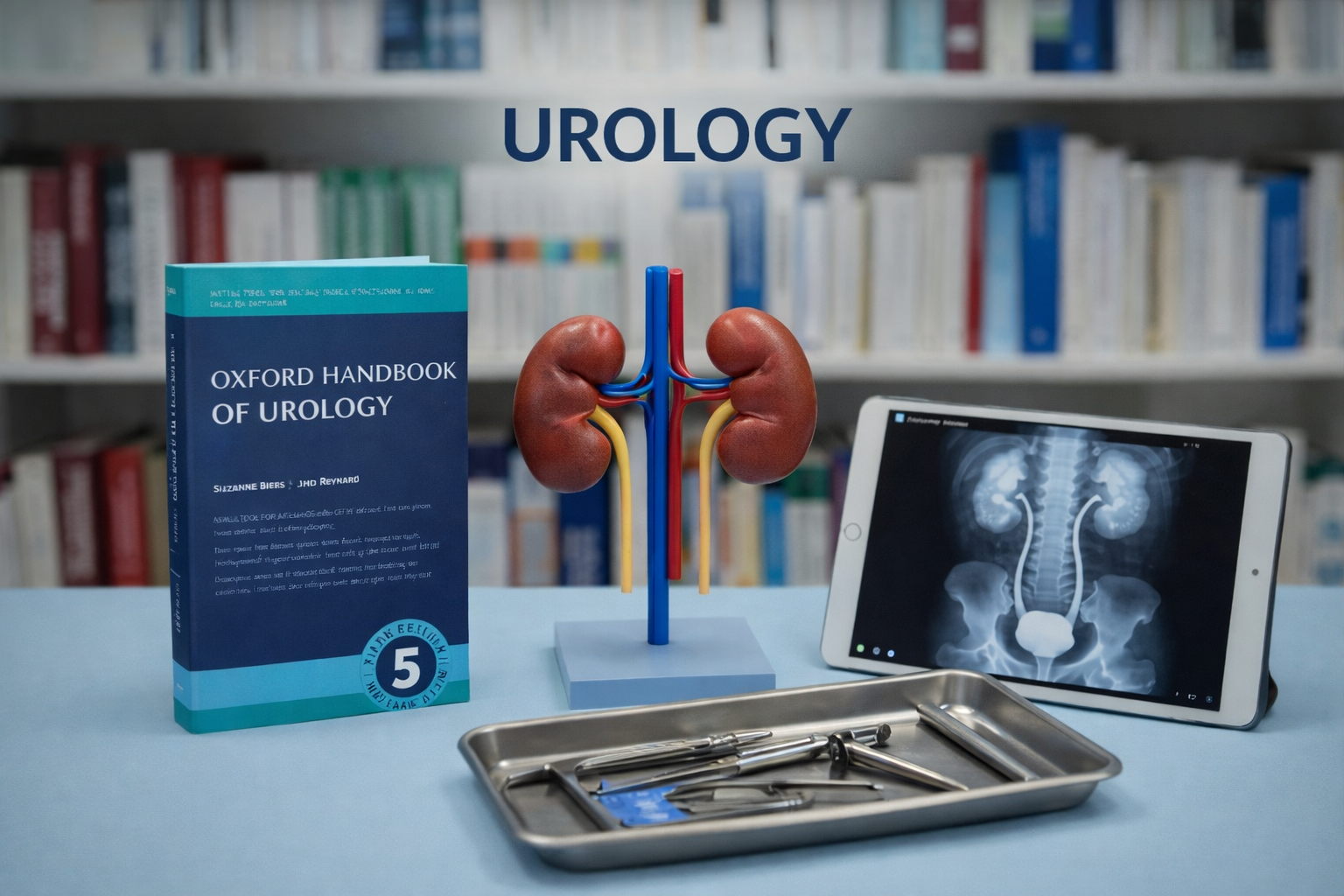
UROLOGY
(54420) - Zisis Kratiras
Περιγραφή Μαθήματος
This one‑month undergraduate Urology course delivers an integrated introduction to common urological conditions, diagnostics, emergencies, oncologic pathways and basic surgical principles. Through interactive lectures, interaction with every-day clinical practice, development of practical skills (catheterization, suturing, endoscopy orientation), clinical ward/outpatient exposure and attendance of informative lessons, students will familiarize themselves with common urological diseases and understand basic laboratory and imaging examinations; interpret urinalysis, cultures and core imaging (US, KUB, CT/MRI). They will also be able to manage emergent urologic scenarios (UTI, renal colic, urinary retention, acute scrotum, obstructive uropathy/sepsis), recognize and investigate symptoms and signs for suspected urological cancers. Furthermore, they will be able to understand indications, perioperative care and common complications of key urological procedures (TURP, cystoscopy, ureteroscopy, lithotripsy, circumcision, orchiectomy). Emphasis is placed on safe procedural practice, antimicrobial stewardship, perioperative safety, patient‑centered communication and consent, multidisciplinary teamwork and evidence‑based decision making. Final assessment of students’ progression will be based on a summative 50‑question MCQ.
Ημερομηνία δημιουργίας
Τρίτη 27 Ιανουαρίου 2026
-
Περίγραμμα
General Information
School: Health Sciences
Academic Unit: School of Medicine
Level of Studies: Undergraduate
Course Code: 54420
Semester: 8th
Course Title: UrologyTeaching Activities & ECTS
-
Lectures: 5 hours/week
-
Clinical Practice: 7 hours/week
-
Credits: 4 ECTS
Course Type: Obligatory / Specialised General Knowledge
Prerequisite Courses: None
Language of Instruction & Examination: English
Course Website: https://eclass.uoa.gr/courses/MEDICEN158/
Course Director
Ass. Prof. Zisis Kratiras
3rd Department of Urology
School of Medicine, National and Kapodistrian University of Athens
Office: Attikon University General Hospital
Tel: 210 5832139
Office hours: 08:00–14:00 (by appointment via email : zkratiras@med.uoa.gr)
Course Secretariat
Eleni Feleki
Email: efeleki@uoa.gr
Address: 125 Papadiamantopoulou Str., 11527, Athens, Greece
Ground Floor
Tel: +30 210 7462235
Office hours: Monday, Wednesday, Thursday (08:00–16:00, by appointment via email)Faculty & Guest Speakers
Prof. Zisis Kratiras
Prof. Michael Chrysofos : mchrysof@med.uoa.gr , mxchris@yahoo.com
Prof. Marios Stavropoulos : stamarios@yahoo.gr
Prof. Dimitrios Deligiannis : d.delijohn@yahoo.com
Prof. Aris Kaltsas : ares-kaltsas@hotmail.com
Timetable & Location
Clinical Practice: 08:00 – 11:00 , in the 3rd Urology Department, in Attikon University General Hospital, 1st Floor
Lectures: 11:00 – 13:00 , at AKISA building (next to Attikon), basement, «K. Dimopoulos” auditorium
For the detailed course schedule, including topics, lecturers, and venues, please refer to the timetable document uploaded in the course files.
Course Objectives/Goals
By the end of this course, students will be able to:
-
Describe the epidemiology, pathophysiology, clinical presentation, and treatment of common urological conditions.
-
Recognize and manage common urological emergencies using basic clinical principles.
-
Obtain a focused urological history and perform a relevant physical examination.
-
Interpret basic laboratory and imaging investigations used in urology (urinalysis, urine culture, blood tests, ultrasound, KUB, CT/MRI).
-
Formulate differential diagnoses and initial management plans for common urological presentations.
-
Understand the indications, basic principles, and complications of common urological procedures.
-
Perform essential practical skills under supervision, including urethral catheterization and basic procedural techniques.
-
Apply principles of antimicrobial stewardship, pain management, and perioperative safety.
-
Communicate effectively with patients and obtain informed consent for basic urological procedures.
-
Work effectively within a multidisciplinary healthcare team.
-
Demonstrate ethical reasoning, professionalism, and respect for patient dignity and confidentiality.
-
Use evidence-based resources to support clinical decision making and develop critical appraisal skills.
Assessment Methods
Final Examination
-
Format: Single-best-answer MCQ
-
Total questions: 50
-
Duration: 60 minutes
-
Scoring: 1 mark per correct answer, no negative marking
-
Passing score: ≥25/50 (50%)
Grading Policy
-
Final exam: 100% of final grade
-
Minimum passing grade: 5/10
Examination Periods
-
After completion of the course / Spring semester exam period
-
September resit period
Additional Requirements
-
Completion of mandatory practical activities (suturing, practical skills, and participation in clinical/surgical activities) is required for exam eligibility.
Recommended Textbooks
- Oxford Handbook of Urology / Suzanne Biers, John Reynard, Simon F. Brewster (eds.) / 5th ed., Aug 2025 / Print ISBN: 9780198878582; Online ISBN: 9780191989001 / Oxford University Press.
- Campbell Walsh Wein Urology / Roger R. Dmochowski, Louis R. Kavoussi, Craig A. Peters (eds.) — 13th ed., 2025. Elsevier. ISBN: 9780323884051.
- Smith’s General Urology / Emil A. Tanagho, Jack W. McAninch (eds.) — 19th ed., 2022. McGraw‑Hill Education. ISBN: 9781260461536
- Smith’s Textbook of Endourology / Arthur D. Smith, Glenn M. Preminger, Louis R. Kavoussi, Gopal H. Badlani (eds.) — 4th ed., 2019. Wiley‑Blackwell. ISBN: 9781119241355.
Suggested articles or other free (or nearly free) resources.
- European Association of Urology (EAU) Guidelines / EAU guideline panels / Latest updates online / Disease‑specific guidelines (bladder, prostate, stones, infections).
- American Urological Association (AUA) Guidelines / AUA panels / Latest updates online.
- WHO Surgical Safety Checklist / WHO / Online free resource.
- Open access journals: BMC Urology, European Urology Open Science (select articles).
Additional Info
Dress Code
Medical students are expected to maintain a professional and neat appearance during clinical activities. Proper personal hygiene and appropriate attire are essential for patient safety, communication, and professional conduct.-
Shorts are not allowed.
-
Students must follow the dress code of the clinical site.
-
Professional attire and white coats should be worn when appropriate.
-
Closed-toed shoes are mandatory in all clinical settings.
Student Responsibilities & Expectations
-
Attendance at lectures, clinical sessions, and examinations is required.
-
In case of illness or emergency, students must notify the central administration (medicen@uoa.gr) and the course secretariat (efeleki@uoa.gr) via email.
-
Students are expected to be punctual. Late entry after the start of a lecture or lab is not permitted and will be recorded as an absence.
-
Students are encouraged to participate actively, ask questions, and engage in the learning process.
Attendance Policy
Attendance is mandatory for both lectures and clinical practice.-
Students may be absent for up to 6 hours of lectures (maximum 30% of total lecture hours).
-
Specifically, students may miss up to 3 lectures.
-
The maximum number of allowed absences in clinical sessions is 6 hours (equivalent to 2 days of clinical training).
*No exchanges between the assigned groups are allowed.
-