
Παρουσίαση/Προβολή
Anaesthesiology-Emergency Medicine
(54731) - Kassiani Theodoraki - Eftychia Polyzogopoulou - Panagiotis Briasoulis
Περιγραφή Μαθήματος
|
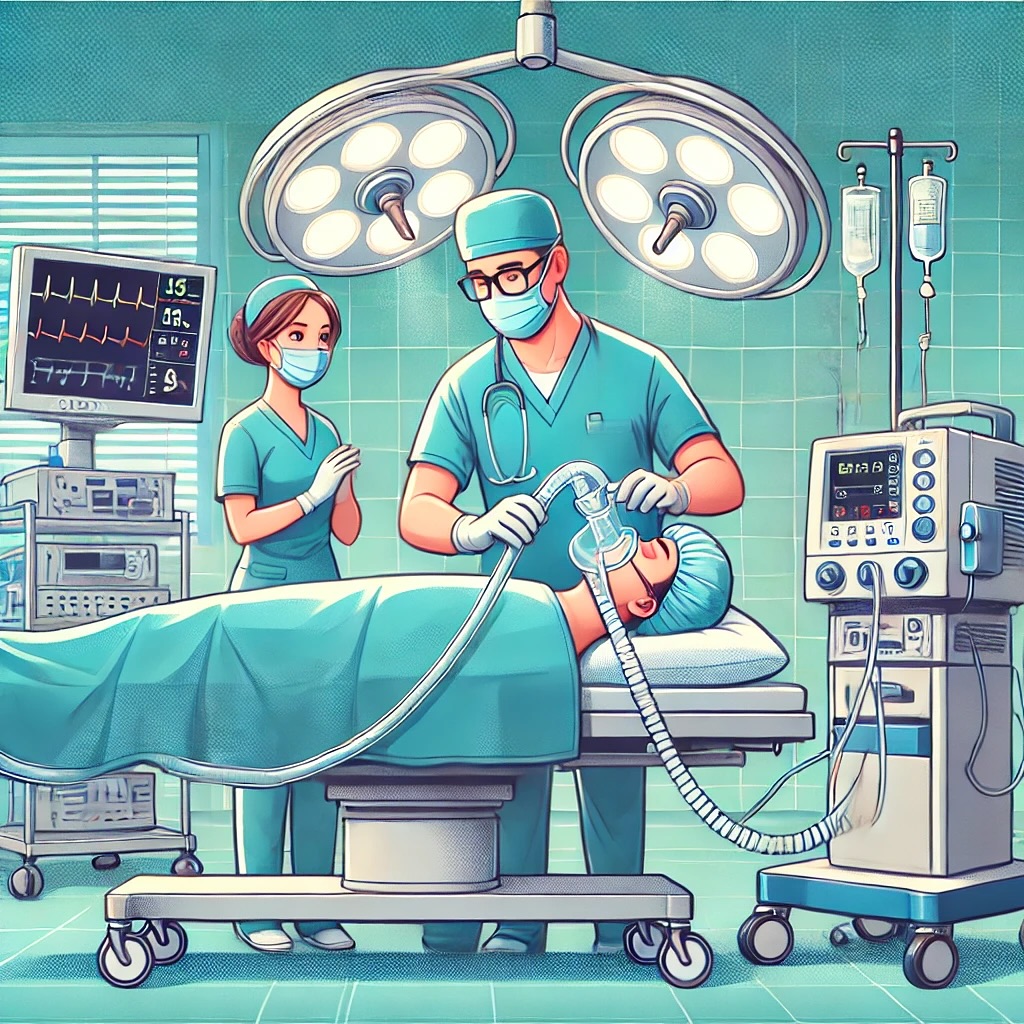
Course section: Anaesthesiology Teaching of the course includes: 1. Theoretical Component The theoretical component consists of lectures and interactive discussions of clinical cases and scenarios, conducted in the amphitheaters of Maggineion Aretaieion University Hospital. 2. Practical Training Practical training takes place in the operating theatres and Pain Clinic of the Aretaieion University Hospital, including skills stations and participation in on-call duties. Training is conducted in groups of a predetermined size, according to schedules and dates that are announced at the beginning of the academic semester. 3. Course Syllabus-Theoretical component
4. Course Syllabus-Practical Training Interactive, hands-on training sessions are conducted in small groups, in the operating theatre, the Post-Anesthesia Care Unit, and the Pain Clinic. Teaching is provided by faculty members in collaboration with attending physicians of the Department of Anesthesiology. 5. Core Clinical Skills Demonstration using simulators and in the operating theatre:
Course section: Εmergency Medicine Aim This course provides medical students with a structured introduction to the principles and practice of Emergency Medicine. Emphasis is placed on rapid clinical assessment, early decision-making, prioritization of care, and teamwork in high-acuity and time-sensitive conditions. Course content Students will be exposed to the fundamentals and the core philosophy of Emergency Medicine. The course focuses to the major and most common clinical emergencies including acute coronary syndromes, cardiac arrhythmias, trauma, cardiac arrest, coma and altered mental status, anaphylaxis, fever, and acute abdominal pain. The course also introduces point-of-care ultrasound as a diagnostic and decision-support tool in the emergency setting, as well as the principles of disaster medicine and mass casualty management. Additionally, a dedicated simulation day allows students to apply theoretical knowledge in realistic and safe environment in variety of clinical scenarios including cardiac arrest, trauma and other critical emergencies, fostering clinical reasoning, decision making, non-technical skills, and situational awareness. Course objectives By the end of the course, students will have developed a foundational understanding of emergency care, improved confidence in initial patient assessment, and an appreciation of the multidisciplinary and dynamic nature of Emergency Medicine.
Examimations This course is assessed by means of written multiple-choice question (MCQ) examinations covering material presented in lectures and practical training sessions. Eligibility to sit the written examination is granted only to students who have fulfilled the required attendance percentage for both lectures and practical training sessions. Students who do not achieve a passing grade are entitled to resit the examination during the official resit examination period. A minimum grade of five (5) out of ten (10) is required for the successful completion of the course.
|
Ημερομηνία δημιουργίας
Δευτέρα 9 Φεβρουαρίου 2026
-
Περίγραμμα
Δεν υπάρχει περίγραμμα