
Μάθημα : Μουσικές Κλίμακες-Τρόποι & Εναρμόνιση της Παραδοσιακής-Δημοτικής Μουσικής
Κωδικός : MUSIC527
MUSIC527 - Δημήτριος Πυργιώτης
Περιγραφή Μαθήματος
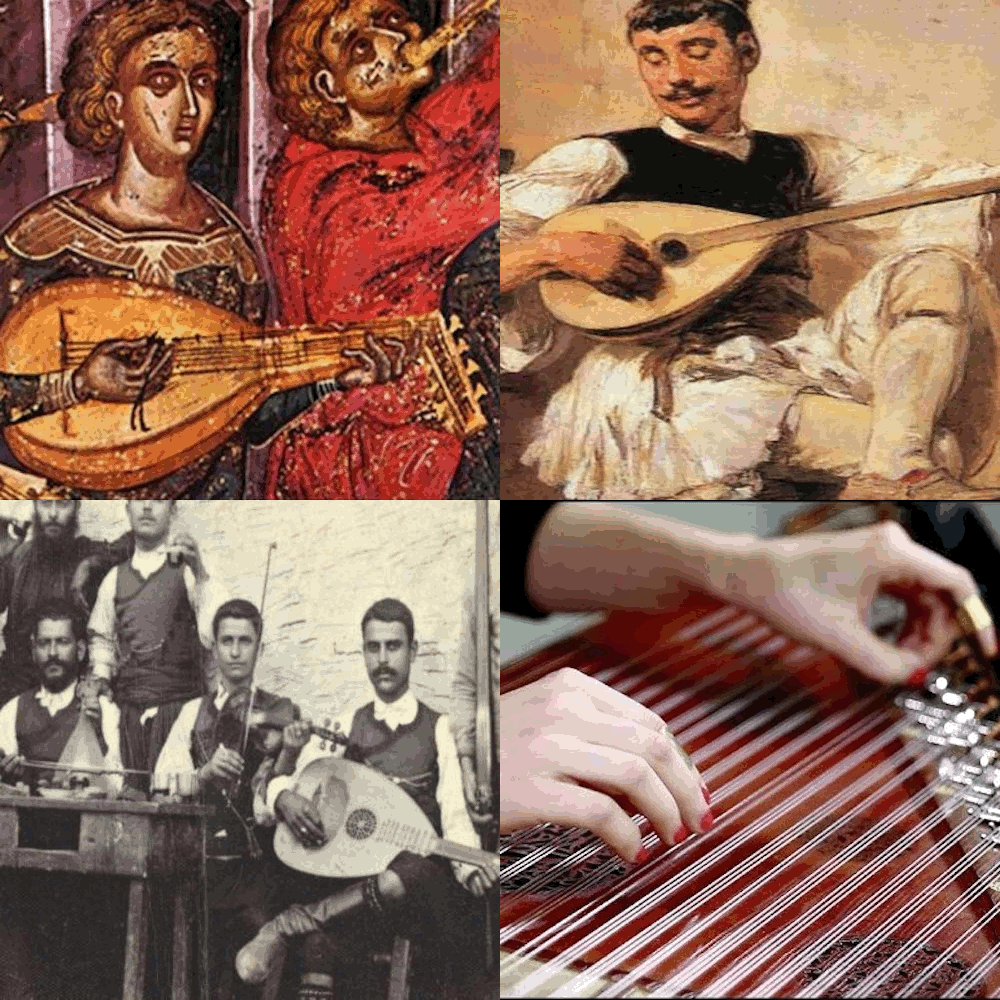
Η ελληνική μουσική δεν είναι μόνο η πολυτιμότερη ίσως μουσική μας παρακαταθήκη αλλά, επιπλέον, πρόκειται να διευρύνει συνεχώς την υπερτοπική της εμβέλεια και να κερδίζει το ενδιαφέρον ερευνητών και μουσικών. Στην κεντρική θεματολογία αυτού του μαθήματος περιλαμβάνονται τα στοιχεία που διαμορφώνουν τον ήχο της ελληνικής παραδοσιακής μουσικής. Εξετάζονται τα ιστορικά χορδίσματα, το φυσικό και το πυθαγόρειο, καθώς και η επαλληλία τους με το ισοσυγκερασμένο στη σύγχρονη πρακτική. Αναφέρονται οι βασικές μελωδικές μονάδες των γενών (τετραχόρδων και πενταχόρδων) και οι τρόποι με τους οποίους δικτυώνονται προκειμένου να σχηματίσουν το ευρύτερο τονικό πλαίσιο των σημαντικότερων κλιμάκων, ήχων ή μακάμ. Παρουσιάζονται διάφορες πρακτικές επιλογές για τη σημειογραφία και την καταγραφή. Επιπλέον, διευρευνώνται συνοπτικά σύγχρονες πρακτικές για την εναρμόνιση αυτής της τροπικής μουσικής. Τελικός στόχος του μαθήματος είναι η διαμόρφωση μιας βασικής εργαλειοθήκης για την ανάλυση ενός κομματιού της ελληνικής παραδοσιακής μουσικής, η οποία αφορά στην εξαγωγή και παράσταση της συνολικής τονικής κίνησης καθώς αυτή προβάλλεται στη συνολική φόρμα.
(Sept. 24, 2014)
On Sept. 20, 1926, the Greek violinist Alexis Zoumbas recorded one of the most devastating bits of music I’ve ever encountered. The song, “Epirotiko Mirologi,” is a pentatonic lament — mirologi — that, for millenniums, has been sung beside fresh graves in Epirus, a historically contentious chunk of land on the Greek-Albanian border. The performance is a little over four minutes long, instrumental and largely improvised against the low anchoring drone of some unnamed accompanist dragging a bow across a double bass. Zoumbas was a technically proficient musician, even virtuosic, but his real gift was in effectively articulating disintegration. There is a palpable hysteria to his playing; each note trembles, as if he has recently suffered an emotional collapse of unknowable magnitude.
Aydemir, M. (2012). The Turkish Makam Guide (S. Kompotiati, Trans.). Αθήνα: Fagottobooks.
Belaiev, V., & Pring, S.W. (1935). Turkish Music. The Musical Quarterly, 21(3), 356-367.
Bozkurt, B., Yarman, O., Karaosmanoğlu, M.K., & Akkoç, C. (2009). Weighing Diverse Theoretical Models on Turkish Maqam Music Against Pitch Measurements: A Comparison of Peaks Automatically Derived from Frequency Histograms with Proposed Scale Tones. Journal of New Music Research, 38 (1), 45-70.
D’ Erlanger, R. (1930-49). La Musique Arabe. Paris: Geuthner.
During, J, & Mirabdholbaghi, Z. (1991). The Art of Persian Music. Washington: Mage.
Elsner, J., & Pennanen, R.P. (Eds) (1997). The Structure and Idea of Maqam. Tampere: Tampere University
Farhat, H. (1990). The Dastgāh Concept in Persian Music. New York: Cambridge University Press.
Farraj J. & Shumays S. A. (2019). Inside Arabic Music: Arabic Maqam Performance and Theory in the 20th Century. New York: Oxford University Press.
Fracile, N. (2003). The “Aksak” Rhythm, a Distinctive Feature of the Balkan Folklore. Studia Musicologica Academiae Scientiarum Hungaricae, 44(1/2), 197-210.
Hall, R.W. (2009). Geometrical Models for Modulation in Arabic Music. Philadelphia: Saint Joseph’s University.
Manuel, P. (1989). Modal Harmony in Andalusian, Eastern European, and Turkish Syncretic Musics. Yearbook for Traditional Music, 21, 70-94.
Marcus, S.L. (1989). Arab Theory in the Modern Period (Doctoral Dissertation). Los Angeles: University of California.
Marcus, S.L. (1992). Modulation in Arab Music: Documenting Oral Concepts, Performance Rules and Strategies. Ethnomusicology, 36(2), 171-195.
Marcus, S.L. (2007). Music in Egypt: Experiencing Music, Expressing Culture. New York: Oxford University Press.
Mavroidis, M. (1999). Οι Μουσικοί Τρόποι στην Ανατολική Μεσόγειο. Αθήνα: Fagottobooks.
Mikosch, T. (2017). Makamlar: The Musical Scales of Turkey. Lulu Press (self publication of the writer).
Muallem, D. (2010). The Maqam Book: A Doorway to Arab Scales and Modes. Kfar Sava, Israel: OR-TAV Music Publications.
Nettl, B., & Riddle, R. (1973). Taqsim Nahawand: A Study of Sixteen Performances by Jihad Racy. Yearbook of the International Folk Music Council, 5, 11-50.
Öztürk, O.M. (2018). How Was the Traditiona Makam Theory Westernized for the Sake of Modernization? Rast Müzikoloji Dergisi, 6(1) 1769-1787.
Pennanen, R.P. (1997). The Development of Chordal Harmony in Greek Rebetika and Laika Music, 1930s to 1960s. British Journal of Ethnomusicology, 6, 65-116.
Pennanen, R.P. (2008). Lost in Scales: Balkan Folk Music Research and the Ottoman Legacy. Musicology, 8, 127-147.
Pyrgiotis, D. (2004). Θησαυρός Μουσικών Κλιμάκων. Αθήνα: Fagottobooks.
Samson, J. (2013). Music in the Balkans. Leiden: Brill.
Shumays, A.A. (2013). Maqam Analysis: A Primer. Music Theory Spectrum, 35(2), 235-255.
Signell, K.L. (1977). Makam: Modal Practice in Turkish Art Music. Seattle: Asian Music Publications.
Signell, K. (2001). Contemporary Turkish Makam Practice. In V. Danielson, D. Reynolds & S. Marcus (Eds): The Middle East (Garland Encyclopedia of World Music, Vol. 6). New York: Routledge.
Simms, R. (2004). The Repertoire of Iraqi Maqamat. Lanham: Scarecrow Press.
Spector, J. (1970). Classical ‘Ud Music in Egypt with Special Reference to Maqamat. Ethnomusicology, 14(2), 243-257.
Touma, H. (1971). The Maqam Phenomenon: An Improvisation Technique in the Music of the Middle East. Ethnomusicology, 15, 38-45.
Touma, H. (1995). The Music of the Arabs (new expanded edition). Portland (OR): Amadeus Press.
Wright, O. (1978). The Modal System of Arab and Persian Music. London: Oxford University Press.
Yekta, R. (1922). La Musique Turque. Nous reproduisons, en 4 parties, l’intégralité de son article conacre à la musique turque et publié en Français en 1922. https://www.turquie-culture.fr/pages/arts/musique-turque/yekta-rauf-la-musique-turque-1922-1.html
Yöre, S. (2012). Maqam in Music as a Concept, Scale and Phenomenon. Zeitschrift für die Welt der Türken, 4(3), 267-286. Zannos, I. (1990). Intonation in Theory and Practice of Greek and Turkish Music. Yearbook for Traditional Music, 22, 42-59.
Ημερολόγιο
Ανακοινώσεις
Όλες...- - Δεν υπάρχουν ανακοινώσεις -